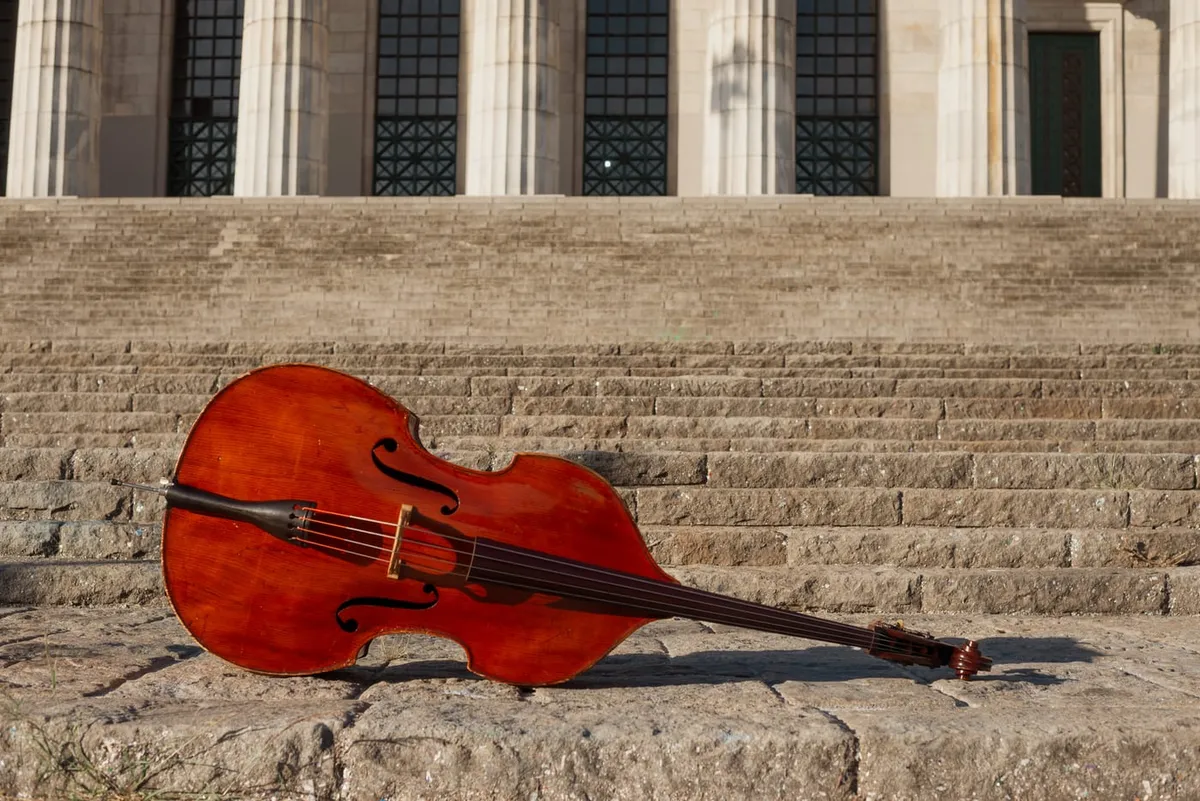
How many months of technical exercises do you have to do before you play your first piece?None.
In this story I’ll tell you why — and why some people spend a whole year with the instrument without making music.
In 2017, I started teaching at a private music school in Buenos Aires. It was my first teaching job outside Venezuela.
At my first meeting with the students, I realized they only knew one book, one method, and they all followed it: it was what the previous teacher had left them. They were simply working hard to get further in the book.
“I’m already on volume 2,” the most advanced one told me. He’d been playing for a year and a half.
I couldn’t believe it.
“And have you looked at any pieces for double bass? Have you played a recital for each other? Has any of you been brave enough to play in an orchestra?”
“Not yet. We’re still working through the book.”
“You don’t have to finish any book. You work through it in parallel.”
“This is the method we use here.”
I still can’t believe it.
Where I come from, the philosophy is completely different. In Venezuela’s El Sistema — where I grew up as a musician — you’re playing from week one. Even if it’s a short arranged piece on open strings. It doesn’t matter. You’re making music. You’re in an ensemble. You’re falling in love with the instrument before anyone tells you it’s hard.
That’s why, three months in, my Argentine students were already giving a recital: just for us, among classmates, but playing pieces, learning a different way.
Because technique is learned by playing, not by waiting until you’re ready to play.
That’s the reason this program exists: a clear guide to start from scratch and make music in weeks, not years.
And you won’t be alone in this. I’m with you through the whole process.
We’ll have the forum open while you take the program: you write me your questions about the content, and I answer them. And if you feel brave enough to send me a video of yourself playing, you’re welcome to — I review those too.
Starting from scratch with someone watching your progress is not the same as starting alone in front of YouTube.
You don’t need any prior knowledge. You don’t need to read music perfectly. You don’t need special talent. All you need is a double bass within reach, and consistency.
Here’s part of what you’ll find in the virtual classroom:
- In module 1, I teach you the parts of the double bass, how to look after it, clean it, and tune it.
- In a 3:35 video, I show you how to find a natural position that keeps you comfortable while you play and helps you avoid pain and injuries down the road. And yes, endpin height is covered here too.
- We talk about the bow: how tight it should be, the basic concepts to start playing, and even how to apply rosin (it sounds obvious, but the truth is not everyone does it right).
- Has this happened to you? Every time you try to play one string, the one next to it rings. Ha! Classic. That’s why, in a 3:00 video, I show you a super easy exercise so you can master string crossings.
- We learn the notes in the first two positions. I’m not sure they’re that easy to memorize at first, but with our first piece it’ll definitely get easier. Why? Because it’s music, not isolated notes: when you can remember the melody, you’ll remember the notes more easily.
- You’ll learn your first scales, essential for training your ear from the start.
- You’ll play two pieces in total, with pedagogical arrangements, and both come with piano accompaniment at three speeds, so you can progress little by little. This is essential for developing your melodic ear: it’s the only way you learn to recognize the notes, which, I’ll admit, is much harder at this stage. Everything is so low and new. Patience.
- You’ll find a forum where you can ask your questions — this is a program that does come with personal support.
This program is for you if:
- You just got a double bass (or you’re about to) and don’t know where to start.
- You started on your own with random videos and feel there’s no order to it.
- You’ve spent months on technical exercises and still haven’t played your first piece.
- You think it’s too late to start. (It isn’t. I started as an adult.)
- You’re a teacher and want a clear guide for your students.
This program is NOT for you if:
- You’ve already mastered the first positions and what you’re after is moving further across the instrument. That’s what “Fingerboard: from position 1 to thumb, No fear!” is for — this one would fall short.
- You can’t set aside a minimum amount of time for it; you need at least half an hour a day. It doesn’t have to be every day, but consistency is everything.
You come in from scratch. You come out playing your first scales and pieces with piano accompaniment.
What’s included
Double bass from scratch
Price
€140
Access to the program is €140.
- The parts of the double bass, how to look after it, clean it, and tune it.
- Your first scales and two pieces with piano accompaniment at three speeds.
- A forum for your questions: I answer them myself, and I review your videos.
- The access is yours, no expiration, 24/7.
PS
In week one of El Sistema, kids play in an orchestra with nothing but open strings. Nobody tells them they’re not ready, or that they have to finish a method book before joining. I won’t tell you that either.
Frequently asked questions
Do I need my own double bass?
You need access to one — your own, rented, or borrowed. This program is for playing from the first week, not for watching videos.
Do I need to read music?
Not right away, but I recommend learning. I explain what you need along the way, and each piece comes with a reference video where I play it, a PDF for your music stand, and the piano audio.
What bow do I need?
I teach the German bow hold. If you have a French bow, all the left-hand and string-crossing work still applies, but the bow technique I show is German. It’s the most natural and easiest bow hold, and I recommend it for beginners.
Is there an age limit?
No. There’s no physical requirement, no right age, no ideal profile.
How does the support work?
My virtual classroom has a forum while you take the program. You write me your questions about the content, and I answer them. And your playing videos are welcome — I review them and give you feedback.
How much time do I need?
Half an hour a day, on the days you can. Consistency does the rest.
How long do I have access?
It’s yours, no expiration, 24/7. You can come back to the guide whenever you want.
Not subscribed to the newsletter yet?