All the scales (without getting bored)
Scales aren’t boring. The way you study them is.
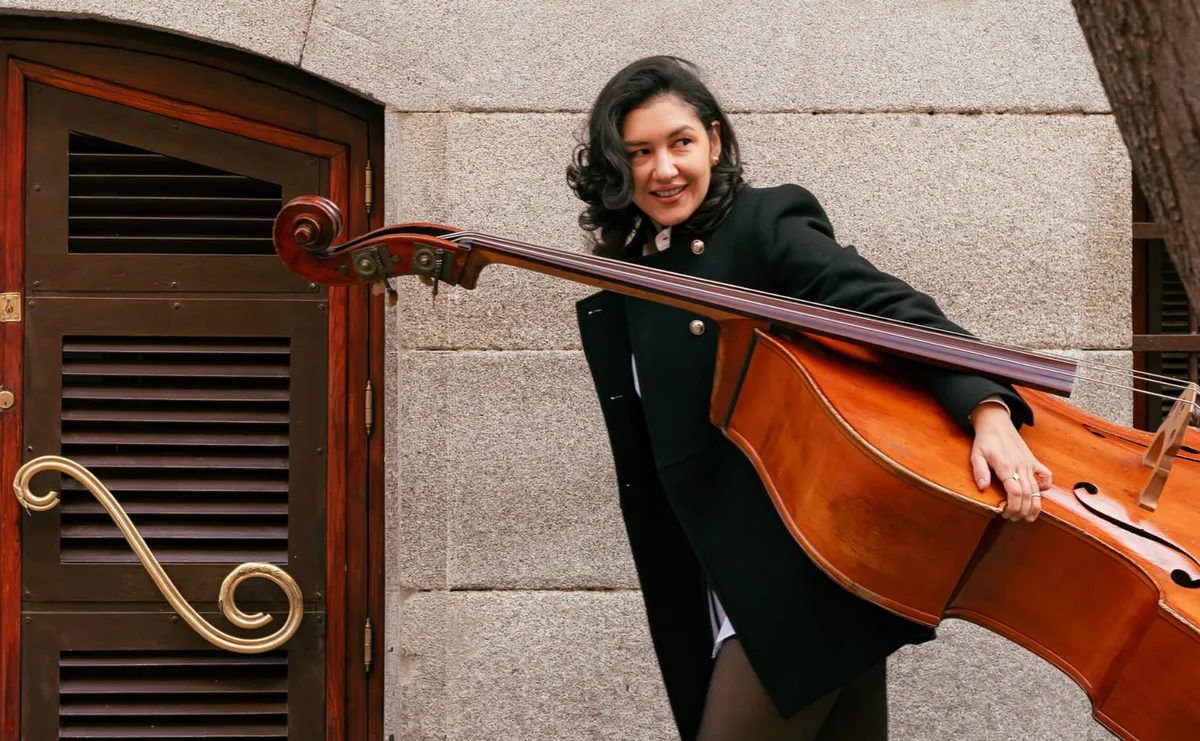
A double bass teacher who hated scales.
In this story I’ll tell you how I made peace with them — and how you can too.
Honestly, I always hated scales.
But don’t get me wrong: I loved practicing, and I still do. I could spend hours on pieces, on technique, on bow exercises (still can).
But scales bored me to death. And when I started teaching, I didn’t feel I had any right to ask my students for them — because I avoided them myself.
The problem is that nobody can escape them. They’re the most useful tool we have for understanding harmony, training the ear, muscle memory… and I could keep this list going until you got tired.
You probably already know this: every youth audition asks for a scale along with the piece. And since my students are constantly auditioning, I decided to fix the problem.
First for me — to make peace with my discomfort and find a way to fall in love with scales. Because if I couldn’t enjoy them, how could I ask that of my students with a straight face?
So I set out on a mission: to make practicing scales fun.
I asked a pianist and composer friend to write me an accompaniment for C major. Something different. Not the usual one–five–one chords. Not in unison.
I wanted changing, modern harmony that would invite me to listen for the next note — that would make me want to keep playing.
The experiment worked so well that I started sharing it with my students. They got hooked. They started asking me for other keys. And in the end I told my friend: I need you to do this for every scale.
That’s how this program was born. I recorded it in full so my students could come back to it before every audition — pick a different key each week and practice it with everything they need.
In this program you’ll find:
- A PDF with all the scales and my favorite fingerings to put on your music stand.
- A video of each scale where I play it, so you have an audio and visual reference with my recommended fingerings.
- The piano accompaniment audio for each one, so you can practice with accompaniment. I have to confess it’s not easy at first: if you’ve played scales with piano before, you’re probably used to basic, boring chords, and this is nothing like that. You’ll have to pay attention, but don’t worry: I’ve left you a reference video so you can get started.
The best ear training you’ll find for working with your instrument.
I chose only the major and melodic minor scales in two octaves because they’re the ones actually used, the ones asked for in youth auditions, and the ones that help you move across the fingerboard fluently — the everyday scales of a double bass player. Enough piling up content you’ll never get to: you just end up overwhelmed.
And every time you practice, you’ll be developing melodic awareness: you learn to listen to the piano’s harmony and answer it with your instrument. You stop depending on the tuner. You stop needing a metronome — the piano marks every beat for you.
Everyone can enjoy practicing scales. All they need is the right approach.
This program is for you if:
- You know you should practice scales… and you always end up avoiding them.
- You’re preparing for auditions and want to show up with your keys nailed down.
- You want a clear warm-up routine before rehearsals and lessons.
- You practice alone at home and want to train your intonation and ear without depending on a tuner.
This program is NOT for you if you don’t know the first positions on the instrument yet — it would be too much for now. Start with “Double bass from scratch.” And if what you’re after is covering the whole fingerboard, this program already comes included in full inside “Fingerboard: from position 1 to thumb, No fear!” — don’t buy it twice.
You don’t need talent, the right age, or any special physical build. All you need is consistency — and a piano to play along with. I’ll take care of the piano.
What’s included
All the scales (without getting bored)
Price
€87
Access to the program is €87.
- All 24 scales — major and melodic minor — in two octaves.
- A PDF of each one with my favorite fingerings, for your music stand.
- A video of each scale where I play it, as a reference.
- The piano accompaniment for each one.
- Access is yours, no expiration, 24/7.
PS
If the teacher who hated scales ended up recording an entire program about them, believe me: you can end up enjoying them too.
Frequently asked questions
What level do I need?
You need to know the first positions on the instrument. From there, every scale comes with my recommended fingering in the PDF and the video.
What exactly is included?
All 24 scales — major and melodic minor — in two octaves. Each one with its fingering PDF, a reference video where I play it, and a piano accompaniment audio.
Why only two octaves?
Because that’s what auditions ask for and what we use in real life. No filler to pad out the syllabus.
Do I need a pianist?
No. All the accompaniments are recorded: you play them from the classroom or download them, and play along.
How much time do I need?
One key per week is a perfect pace. With 20–30 minutes, on the days you can, you’ll make progress.
How long do I have access?
It’s yours, no expiration, 24/7. Perfect for coming back before every audition.
Is this program included in “Fingerboard”?
Yes, in full. If you’re planning to cover the whole fingerboard, buy it there — buy it here only if scales are what you’re after.
Not subscribed to the newsletter yet?